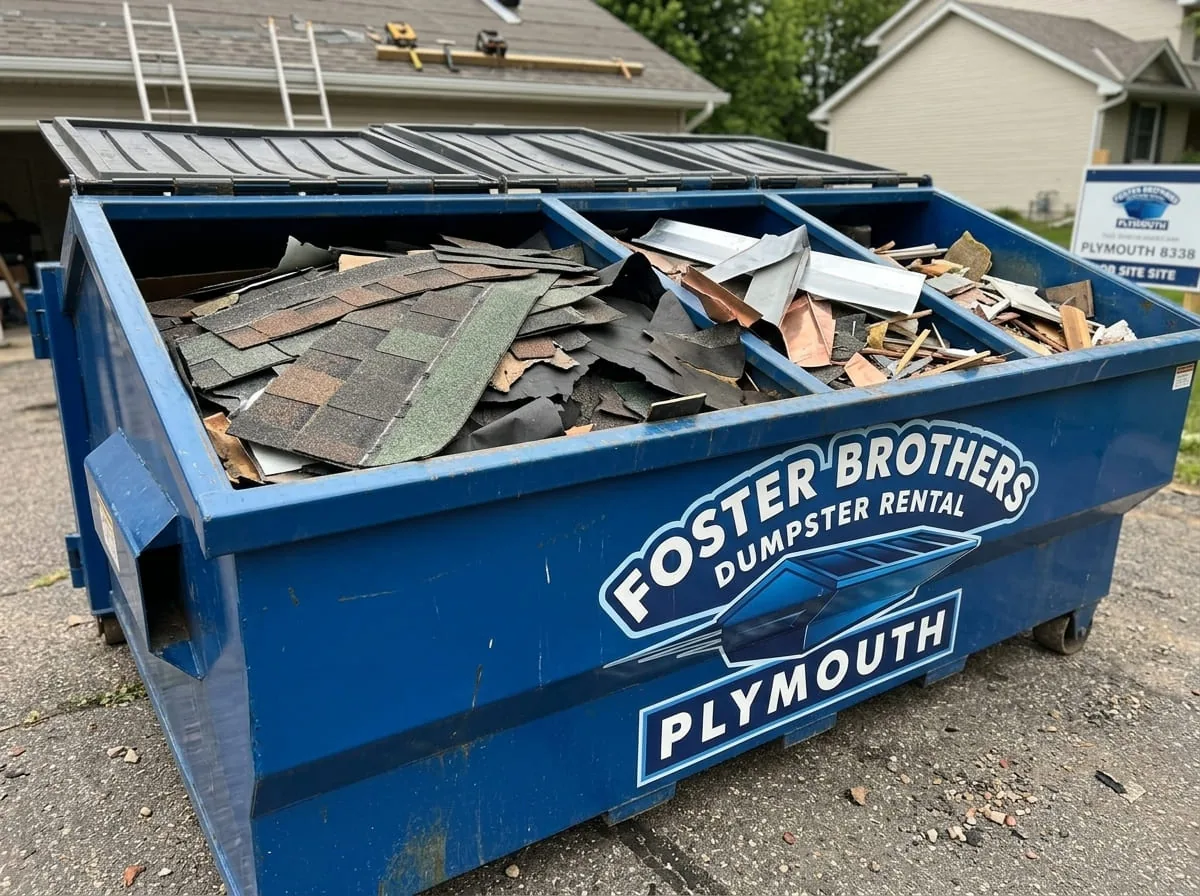
Roofing debris is deceptively heavy for how it looks piled on a tarp. A stack of old shingles doesn't take up much space, but it weighs far more per cubic foot than the mixed household junk or construction scraps a dumpster usually holds. Sizing a dumpster for a roof tear-off is less about volume and more about weight — get that part wrong and you'll either pay overage fees on a dumpster that's still half empty, or need a second pickup mid-project.
Start with roofing squares
Roofers measure a roof in squares, where one square covers 100 square feet. Most residential re-roofs fall somewhere between 15 and 40 squares depending on the size and shape of the house, and that number is the starting point for sizing a dumpster — not the square footage of the house itself, since roof pitch, dormers, and overhangs all add material beyond the home's footprint. If your roofing contractor has already measured the job, ask for the square count; it's the single most useful number for figuring out what size dumpster to order.
Layers matter as much as squares
The other variable that changes everything is how many layers of shingles are coming off. A single-layer tear-off on a standard asphalt shingle roof produces roughly 2 to 3 tons of debris for every 15 to 20 squares. A double-layer tear-off — common on older homes where a second layer was installed over the first rather than stripping it — can nearly double that weight for the same square footage. If you're not sure how many layers are on your roof, ask your roofing contractor to check before the job starts; it's a quick visual inspection and it changes the sizing math significantly.
Rough sizing guide
As a general starting point:
- Small roof, single layer (up to roughly 15-20 squares): a 15-yard dumpster is often enough, though weight limits can still be the deciding factor.
- Mid-size roof or double layer (roughly 20-30 squares): a 20 or 30-yard dumpster typically handles this comfortably.
- Large roof or multiple layers (30+ squares, or steep/complex rooflines): a 30-yard dumpster is usually the safer call, and very large or multi-layer jobs sometimes need two pulls rather than one oversized container.
These are starting points, not guarantees — every roof is different, and the honest answer is that weight limits, not container size, are usually what determines cost on a roofing job. Our roofing dumpster rental page has more detail specific to shingle debris, and the 20-yard and 30-yard size pages break down dimensions and typical weight allowances if you want to compare directly.
Why weight, not size, drives the cost
Shingles are dense. A dumpster that looks nowhere near full can already be at its weight limit, especially with asphalt shingles, which run heavier than most other roofing materials. This is the single most common surprise for homeowners doing their first re-roof project — the container has plenty of visible room left, but the truck can't legally haul more weight than it's rated for. If a job has any uncertainty in it — an unknown number of layers, a steep roof that's hard to estimate, or a large or oddly shaped roofline — it's worth erring toward the larger size or asking about weight limits up front rather than guessing low.
Scheduling around the re-roof job
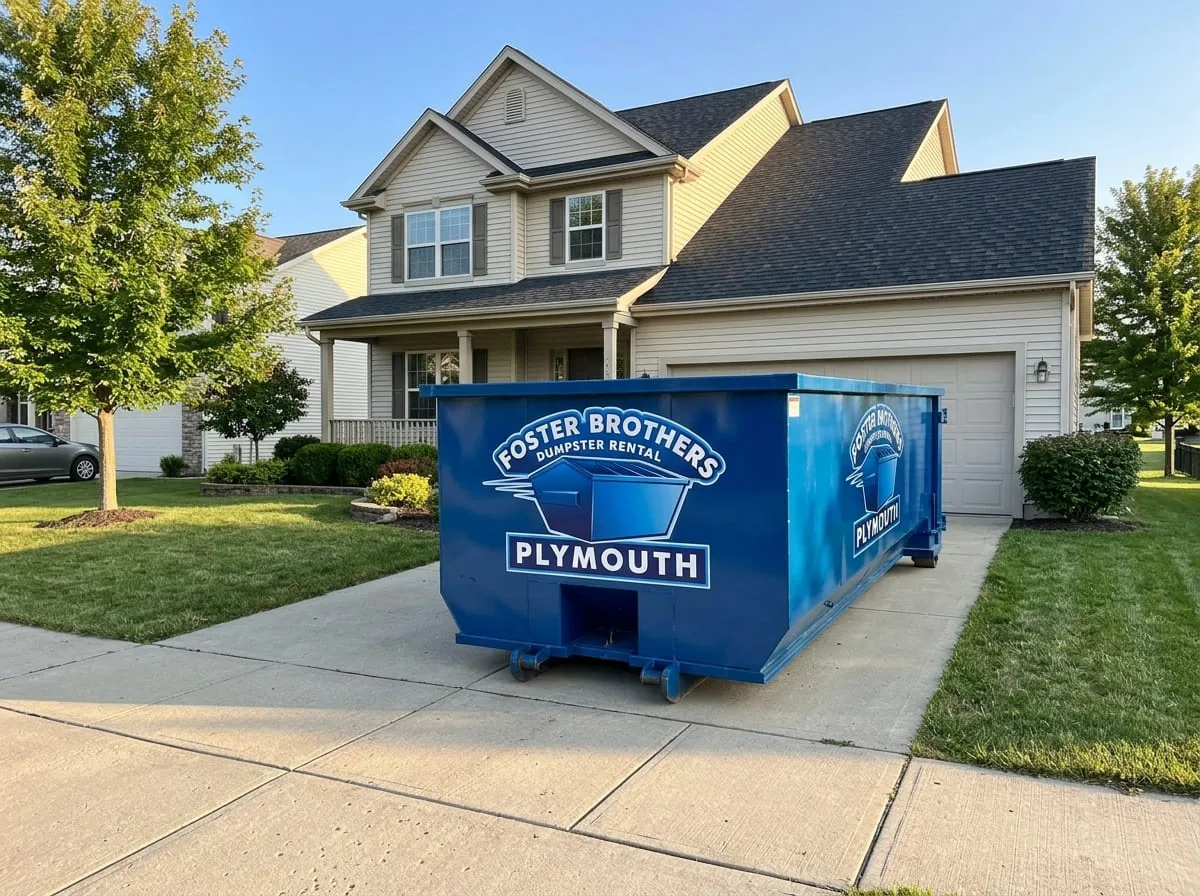
Timing a dumpster rental around a roofing job is different from timing one around a slower renovation. Roofers typically want the old roof off, the deck inspected, and new material going on within the same day or two, weather permitting — so the dumpster needs to be on site and ready before the crew starts tearing off, not ordered as an afterthought once debris is already piling up on tarps in the yard. It also helps to have the dumpster placed somewhere the roofing crew can access easily for direct loading, rather than requiring debris to be carried a long distance across the property. If your driveway is tight or shared, mentioning that when you book gives our team a chance to plan placement that works for both the roofing crew and your household during the job.
A note on storms and scheduling
Re-roofing jobs on the South Shore often follow storm damage — a bad wind event or an ice dam that's caused shingle or flashing damage over the winter can turn a repair into a full tear-off once a roofer gets a closer look. If your project is storm-driven, insurance timelines sometimes add urgency that a routine re-roof doesn't have, so it's worth booking the dumpster as soon as the scope of work is confirmed rather than waiting until the contractor has a firm start date. Our same-day dumpster rental option can help when a roofing job needs to move faster than a typical multi-day lead time.
Getting it right the first time
The short version: know your square count, know your layer count, and lean toward the larger size when either number is uncertain. A properly sized dumpster keeps a roofing job moving instead of stalling out over a mid-project pickup, and it's usually cheaper in the long run than guessing small and paying for a second haul. If you want help matching a size to your specific roof, our general sizing guide is a good companion read, and our contact page is the fastest way to get a recommendation before your roofing crew arrives.