Drive through Carver, Wareham, Middleborough, or Hanson and you don't have to go far before you spot a cranberry bog. This corner of Massachusetts is cranberry country in a real, historical sense, not just a marketing phrase — and that heritage happens to shape a genuinely practical question for property owners here: how the ground itself behaves when something as heavy as a loaded roll-off dumpster sits on it.
A real cranberry heritage, briefly
Ocean Spray, one of the best-known names in the industry, was founded in 1930 as Cranberry Canners, Inc. in Hanson, Massachusetts — one of the 14 towns in our service area. The company later moved its headquarters to Plymouth itself in the mid-to-late 1970s, and today it's headquartered near the Middleborough/Lakeville line, just down the road from where it all started. Middleborough leans into that legacy and brands itself the Cranberry Capital of the World. Carver, Wareham, and Duxbury round out the list of towns in our area with real, significant cranberry-growing history of their own. It's a distinctive piece of South Shore identity, and if you've spent any time out this way, you already know cranberry bogs aren't a novelty — they're part of the working landscape.
Why this matters for dumpster placement
Plymouth and the surrounding South Shore sit on a glacial outwash plain — sandy, well-drained soil left behind by retreating glaciers, dotted with kettle ponds and the pine barrens of the Plymouth Pinelands, with the Plymouth-Carver Aquifer, the second-largest in Massachusetts, running beneath much of it. That sandy base is generally good news for placing a dumpster: it drains well and holds up reasonably solidly under weight in most driveway and yard settings. But cranberry bogs exist in the first place because parts of this region hold water close to the surface, and properties near a bog, wetland, or pond can have a genuinely higher water table and softer ground than a typical suburban lot — especially seasonally, after heavy rain or during spring thaw.
Practical placement tips for rural and bog-adjacent property
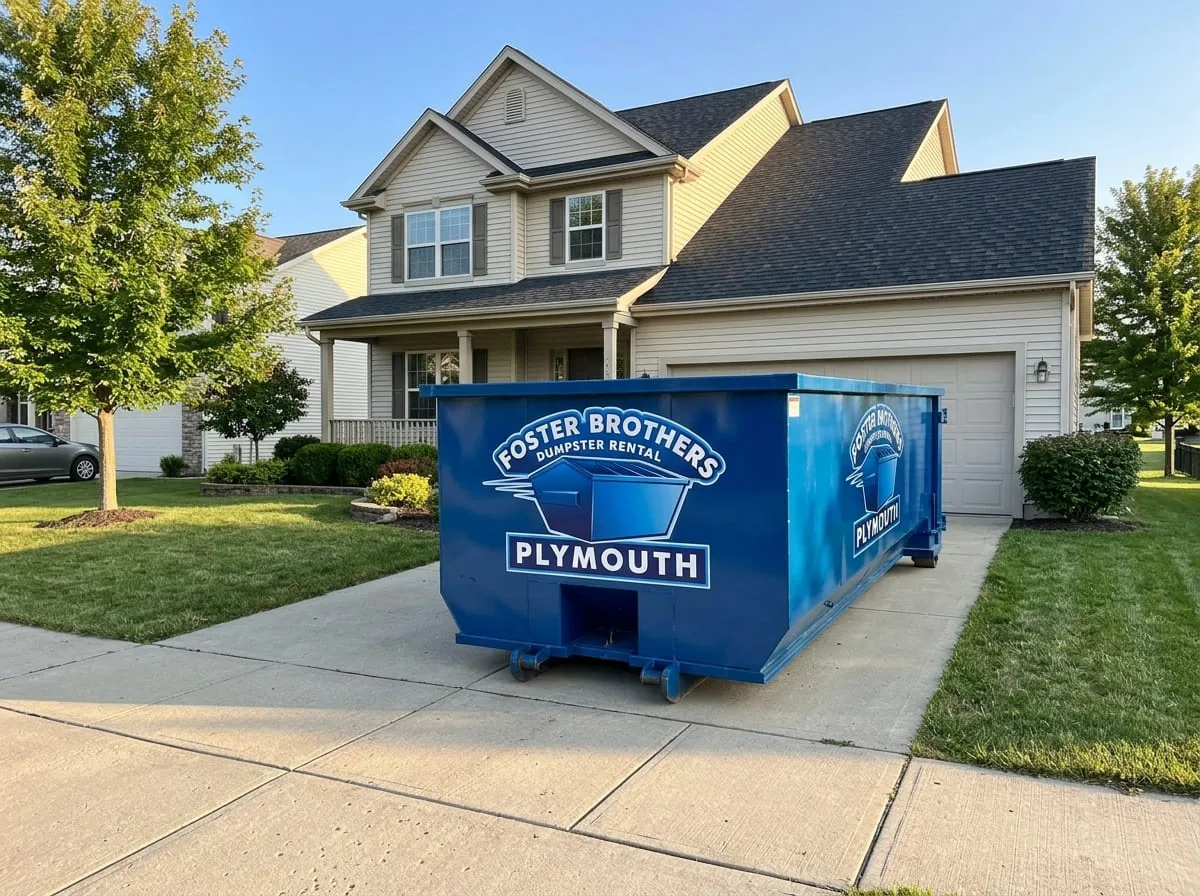
- Stick to hard, established surfaces when possible. A paved or well-compacted gravel driveway is the safest bet for a loaded roll-off. Grass, dirt, and especially anything near standing water is more likely to rut or sink under the weight.
- Ask about ground conditions when you book. If your property is near a bog, pond, wetland, or low-lying area, mentioning that up front lets our team plan delivery and placement with that in mind rather than discovering it on arrival.
- Be extra cautious in spring and after heavy rain. Ground that's perfectly firm in a dry August can be considerably softer after a wet spring thaw, which is exactly when a lot of outdoor cleanup and renovation work tends to start.
- Watch the edges, not just the center. Even sandy, well-drained soil can rut or erode at the perimeter of where a full dumpster sits, particularly with repeated truck traffic delivering and picking up.
- Consider plywood or planking under the drop point if the only available placement spot is on grass or unpaved ground — it spreads the weight out and helps protect the surface underneath.
- Give the delivery truck a clear, wide approach. Rural driveways and access roads near bog properties are sometimes narrower or less improved than a typical suburban street, so a heads-up about tight turns or low branches helps the driver plan the approach.
None of this is unique to cranberry country specifically — it's really just a rural and semi-rural property consideration that happens to come up often in this part of the South Shore, given how much of the landscape here borders wetlands and bogs. Whether you're clearing brush from a wooded lot in Carver, working on a renovation near a bog edge in Wareham, or handling a cleanup on rural property anywhere in our 14-town service area, a quick conversation about ground conditions before delivery goes a long way toward a smooth drop-off and pickup.
We serve cranberry country, we're not part of the industry
To be clear about what this is and isn't: Foster Brothers doesn't have any special connection to the cranberry industry, and we're not claiming one. We're simply a local dumpster rental company that happens to serve towns — Hanson, Middleborough, Carver, Wareham, and Duxbury among them — where cranberry farming has shaped both the local economy and the land itself for generations. That local knowledge, including an understanding of how the ground behaves on rural and bog-adjacent property, is just part of doing this work well in this particular corner of Massachusetts.
If you're planning a project on rural or bog-adjacent property and want help thinking through placement before delivery day, our size guide and residential dumpster rental page are good starting points, or you can reach out directly through our contact page to talk through your specific property.
What to mention when you book
A little detail up front saves a wasted trip. If your driveway sits close to a bog edge, if the access road narrows down to a single lane near the property line, or if a section of the yard tends to stay wet longer than the rest, all of that is worth mentioning when scheduling delivery. Our team plans routes and placement around whatever a property actually looks like, not around a generic assumption of a flat, paved suburban driveway — and rural, bog-adjacent lots across Carver, Wareham, Hanson, Middleborough, and Duxbury come in a lot of different shapes. The goal on delivery day is simple: get the dumpster placed somewhere solid, accessible, and out of the way of the work itself, without leaving ruts in a yard that took years to establish.
It's also worth thinking a step ahead to pickup day. A dumpster that goes in easily on a dry morning can be sitting on noticeably softer ground a week later if the weather's turned wet in between. If your property has any low spots or bog-adjacent sections that tend to hold water, keeping an eye on conditions over the course of the rental — and flagging any change to our team before pickup — helps make sure the truck can get back in and out cleanly.