What Can and Cannot Go in a Dumpster in Massachusetts
Most household, construction and yard debris is fine — but Massachusetts has a few state-specific rules worth knowing before you load, starting with electronics.
Plymouth dumpster guide
No two dumpster jobs price the same. Here are the real factors behind a flat-rate quote — size, tonnage, rental length and material — so you know what to describe when you call.
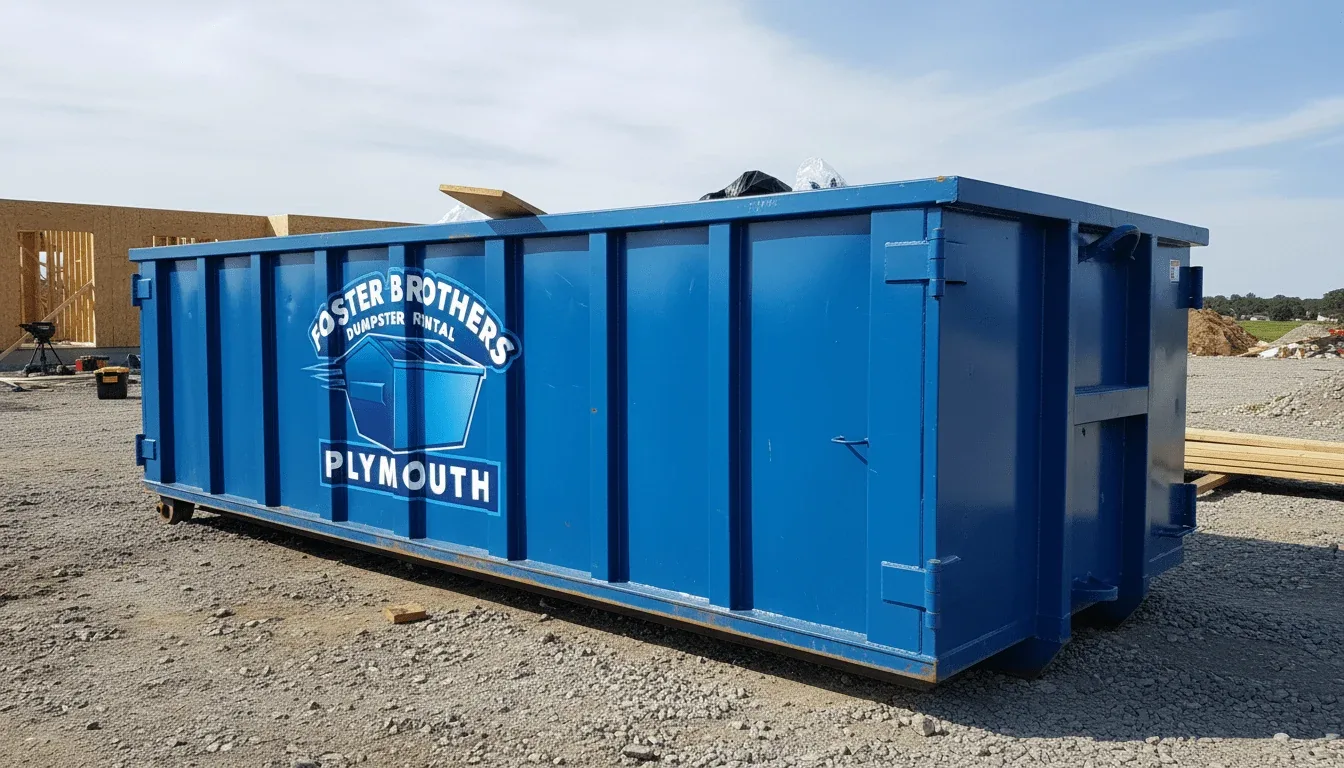
“How much does a dumpster cost?” is the question we get most, and it is a fair one — but a single number would not actually answer it well, because the price of a roll-off in Plymouth depends on several things that shift from job to job. Foster Brothers prices on a flat-rate model, which at least removes the surprise fees that make dumpster pricing confusing elsewhere. What follows is what actually moves that flat rate up or down, so you know what to describe when you call for a quote.
The container itself is the first variable. Foster Brothers runs five sizes — 10, 15, 20, 30 and 40 yard — and as a rule, a bigger box costs more than a smaller one because it takes more truck capacity, more steel and more disposal volume to deliver and haul away. That said, bigger is not automatically better value. A container sized correctly for the job, rather than oversized “just in case,” is usually the cheaper outcome. Our guide to what size dumpster you actually need walks through how to match a size to a project, and the sizes page has specs for all five.
This is where most unexpected charges come from on any dumpster rental, anywhere. Every size includes a stated tonnage allowance in its flat rate, and that allowance is not the same thing as the container being full. Light, bulky material — furniture, packaging, framing offcuts, general household clutter — tends to fill the space long before it fills the weight allowance. Dense material — concrete, brick, tile, roofing shingles, wet soil, or waterlogged insulation — can hit the tonnage allowance while the box still looks far from full. Go over the included tonnage and the overage is billed at the per-ton rate agreed at booking, which is why describing your material honestly when you call is the single best way to keep the price predictable.
How long you keep the container factors in too. A standard rental window covers most residential and small commercial jobs comfortably, and extending it for extra days is usually a straightforward add-on rather than a renegotiation. A live jobsite that needs a container swapped out mid-project — pulled when full and replaced with an empty one — is a different pricing shape than a single drop-and-pickup for a weekend cleanout, so let us know upfront whether you are planning one placement or an ongoing swap schedule.
Beyond straight weight, what is actually going into the container matters. Clean construction and demolition debris, general household junk, and yard waste are all routine loads. Certain materials cost more to process or cannot go in a standard load at all — see our guide to what can and cannot go in a dumpster in Massachusetts for specifics, including Massachusetts’ electronics disposal rules and the state’s broader waste disposal ban list. Mixed loads with a mattress, an appliance, or a mix of debris types are generally fine to describe when you book — it is the load we do not know about in advance that causes friction, not the load itself.
The point of flat-rate pricing is that delivery, the rental period, pickup, fuel and disposal up to the stated tonnage allowance are quoted as one number before the container ever arrives. You should not see separate delivery fees, environmental surcharges or trip charges show up afterward. The two things that can change a final bill are going over the agreed tonnage and keeping the container meaningfully longer than planned — both of which are avoidable with an honest description of the job at booking time.
Where the dumpster sits can also be part of the conversation. A container placed entirely on your own private driveway typically does not add anything to the process. If there is no room and it needs to sit in the street or public right-of-way, even briefly, Plymouth requires a permit through the Department of Public Works, which is a town process rather than a fee we set. Our Plymouth dumpster permit guide covers that in detail if your driveway situation is tight.
A weekend garage cleanout and a multi-week commercial fit-out do not price the same way, even at the same container size. A one-time residential drop is usually a single delivery, a fixed rental window and one pickup. A commercial or ongoing construction job more often needs a container swapped out partway through, or scheduled around inspections and phases, which changes the shape of the quote even when the flat-rate logic underneath stays the same. If you are running a longer project, mentioning that upfront lets us quote the whole job rather than a single drop.
Not every hauler prices this way, and it is worth asking about directly if you are comparing quotes. A price that looks lower upfront but adds delivery fees, environmental charges, or a low included tonnage that almost guarantees an overage is not actually the better deal once the job is done. Asking what is included — delivery, pickup, the rental window, and the exact tonnage allowance — before you book is the simplest way to compare quotes accurately, whether you are calling Foster Brothers or anyone else.
Because size, weight, rental length and material type all move together, the fastest way to a real number is a short phone call rather than guessing from a generic price list. Describe the project — what kind of job, roughly how much material, and how long you expect to need the container — and we will quote a flat rate that reflects your actual job, not an average one. Browse our full services or sizes pages for background, or go straight to contact us for a quote.
FAQs
Foster Brothers quotes a flat rate that is meant to bundle delivery, the rental period, pickup, fuel and disposal up to a stated tonnage allowance into one number. The two things that can add to that number afterward are going over the included weight allowance or keeping the container substantially longer than planned.
Overage charges from exceeding the included tonnage allowance are the most common surprise, and they are also the most avoidable — describing your material honestly when you book, especially anything dense like concrete, tile or shingles, lets us size and quote the job correctly upfront.
Placement on your own driveway generally does not add anything to the process. If the container needs to sit in the street or public right-of-way, Plymouth requires a Department of Public Works permit, which is a separate town process rather than something we charge for directly.
Ready when you are
Call and you will speak to someone local who knows the streets, the permit rules and which box actually fits your driveway. Flat rate quoted up front.
Keep reading
Most household, construction and yard debris is fine — but Massachusetts has a few state-specific rules worth knowing before you load, starting with electronics.
It mostly comes down to where the container sits. Here's the difference between driveway placement and street placement in Plymouth — and who actually regulates it.
What's recyclable, what's bannable, and how to size the container — plus who actually carries compliance responsibility on a Massachusetts jobsite.