Construction Debris Disposal in Plymouth, MA
What's recyclable, what's bannable, and how to size the container — plus who actually carries compliance responsibility on a Massachusetts jobsite.
Plymouth dumpster guide
It mostly comes down to where the container sits. Here's the difference between driveway placement and street placement in Plymouth — and who actually regulates it.
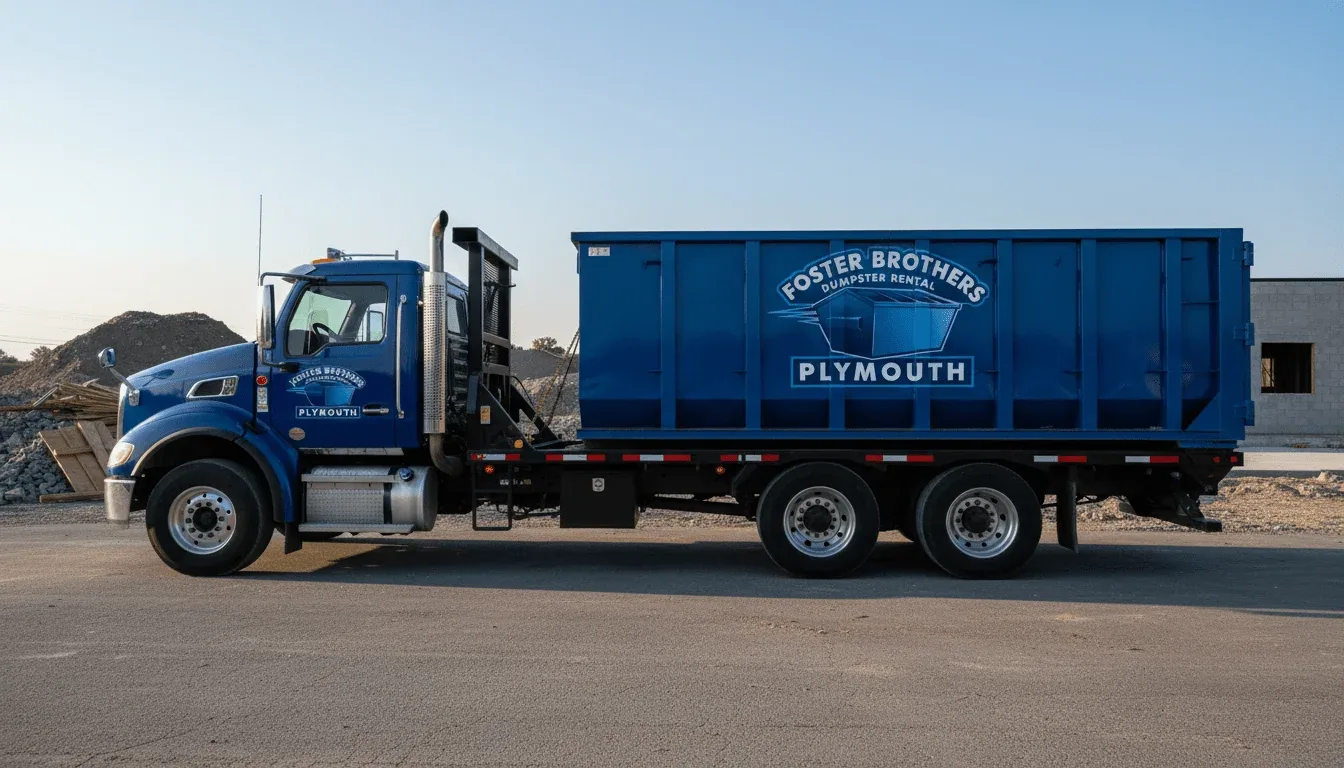
The permit question comes up on nearly every dumpster call in Plymouth, and the honest answer is short: it depends almost entirely on where the container sits, not on the project itself.
If the dumpster stays on your own property, plan on no permit and no extra paperwork. If any part of it needs to sit in the street, over a sidewalk, or in the public right-of-way, plan on a Department of Public Works permit and a bit of lead time. Almost every Plymouth job falls cleanly into one of those two categories, and the rest of this guide walks through both in more detail, plus who actually oversees the rule and why.
A dumpster placed entirely on private property — your own driveway, a paved pad, a yard — typically does not require a town permit. This covers the large majority of residential jobs we deliver for, from a residential cleanout to a roofing tear-off, as long as the container stays off the street and public right-of-way.
If there is no room on the property — a short or narrow driveway, ongoing construction blocking the usual spot, a townhouse or multi-family lot with no private pad — and the dumpster needs to sit in the street or the public right-of-way even briefly, Plymouth requires a permit through the process for placing anything in the public way. There is no single published fee we can quote here, and rather than guess, the right move is to call the Plymouth Department of Public Works directly for current requirements, or review Plymouth’s Street Opening Permits process, which covers placements in the street or right-of-way. If you are not sure which category your job falls into, tell us your driveway situation when you book and we can flag it — and if a permit is likely needed, plan on a little lead time, since permits are a town process on the town’s timeline, not something arranged same-day.
Plymouth is a New England town-meeting town with no mayor — it is governed by a five-member Select Board and a Town Manager, with day-to-day services, including solid waste, run by town departments. The Department of Public Works administers Plymouth’s solid-waste bylaw, Town Code Chapter 260, and handles the separate street opening permit process for anything placed in the public way. Plymouth County government, by contrast, functions today mainly as a Registry of Deeds and court and sheriff system — it has no active role in waste or recycling regulation, which sits entirely with individual town departments and the state’s environmental agency, MassDEP. If you come across a claim that dumpster placement needs county-level licensing, that is not accurate for Plymouth or elsewhere in Massachusetts; this is a town and state matter. You can read the bylaw itself at Plymouth Code Chapter 260, or start at the Town of Plymouth site for general town services.
Plymouth has plenty of lots where the driveway-only answer is not obvious — older village-center homes on narrow lots, condo and multi-family buildings with shared or limited parking, and properties mid-renovation where existing material is already taking up the usual container spot. On any of these, it is worth having the street permit question in mind before delivery day rather than after, since arranging a permit generally takes some lead time through the town. If you are not sure whether your specific lot has enough room, describe it when you call and we can usually tell from experience with similar Plymouth properties whether it is likely to need one.
A few things make the driveway-only path more likely. Measure before you book — a 10 or 15 yard needs roughly 20 feet of length and a 20, 30 or 40 needs about 27 feet, plus around 10 feet of width for the doors to swing. Clear a straight, obstruction-free approach so the truck does not need to improvise a spot at the curb. And if your property backs onto softer ground — common near the ponds, bogs and wetlands found throughout Plymouth County — picking a firm, well-drained section of the driveway for placement avoids rutting under a full container’s weight. None of this is required paperwork; it is just what keeps most jobs entirely off the town’s permit radar in the first place.
None of this is bureaucracy for its own sake. A dumpster sitting in a travel lane or blocking sight lines at an intersection is a real safety issue, which is the actual reason towns like Plymouth regulate anything placed in the public way rather than leaving it purely to a property owner’s judgment. Understood that way, the permit process is less an obstacle and more a formality for the small share of jobs where the container genuinely cannot stay on private property — and for everyone else, it simply does not come up.
Describe your driveway or lot when you call and we will tell you honestly whether your job is likely to need a street permit or not, based on what we see on similar Plymouth properties. When it does, we can point you to the right DPW contact so you are not guessing at requirements yourself. See our roll-off dumpster rental page for container options, our FAQ page for more general questions, or contact us to talk through your specific property.
FAQs
Typically no. A dumpster placed entirely on private property, such as your driveway, generally does not require a town permit. Permits come into play when the container needs to sit in the street or public right-of-way.
Plymouth requires a permit through its street opening permit process for anything placed in the public way, even briefly. There is no single published fee to quote, so the right step is to contact Plymouth's Department of Public Works directly for current requirements.
No. Plymouth County government today functions mainly as a Registry of Deeds and court and sheriff system and has no active role in waste or recycling regulation. Permitting is handled by the Town of Plymouth's Department of Public Works, with broader waste rules set at the state level by MassDEP.
Ready when you are
Call and you will speak to someone local who knows the streets, the permit rules and which box actually fits your driveway. Flat rate quoted up front.
Keep reading
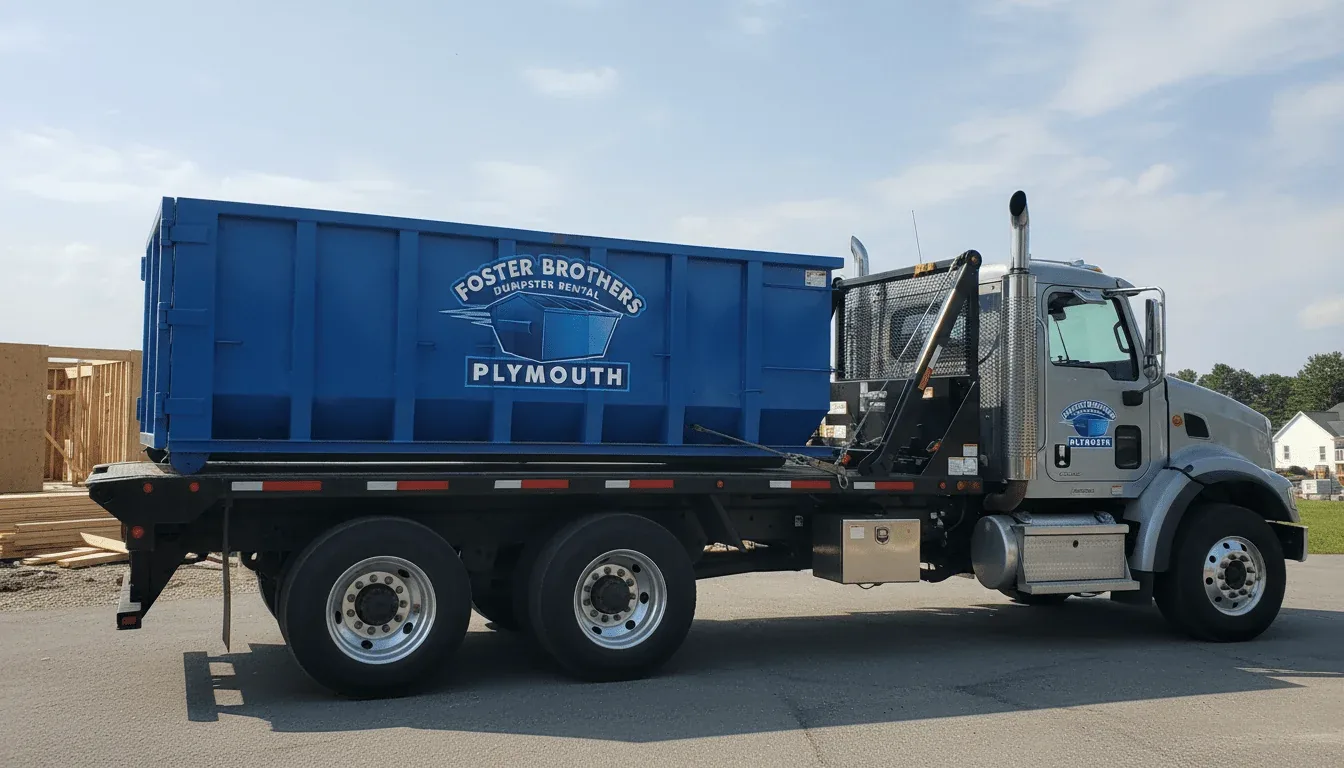
What's recyclable, what's bannable, and how to size the container — plus who actually carries compliance responsibility on a Massachusetts jobsite.
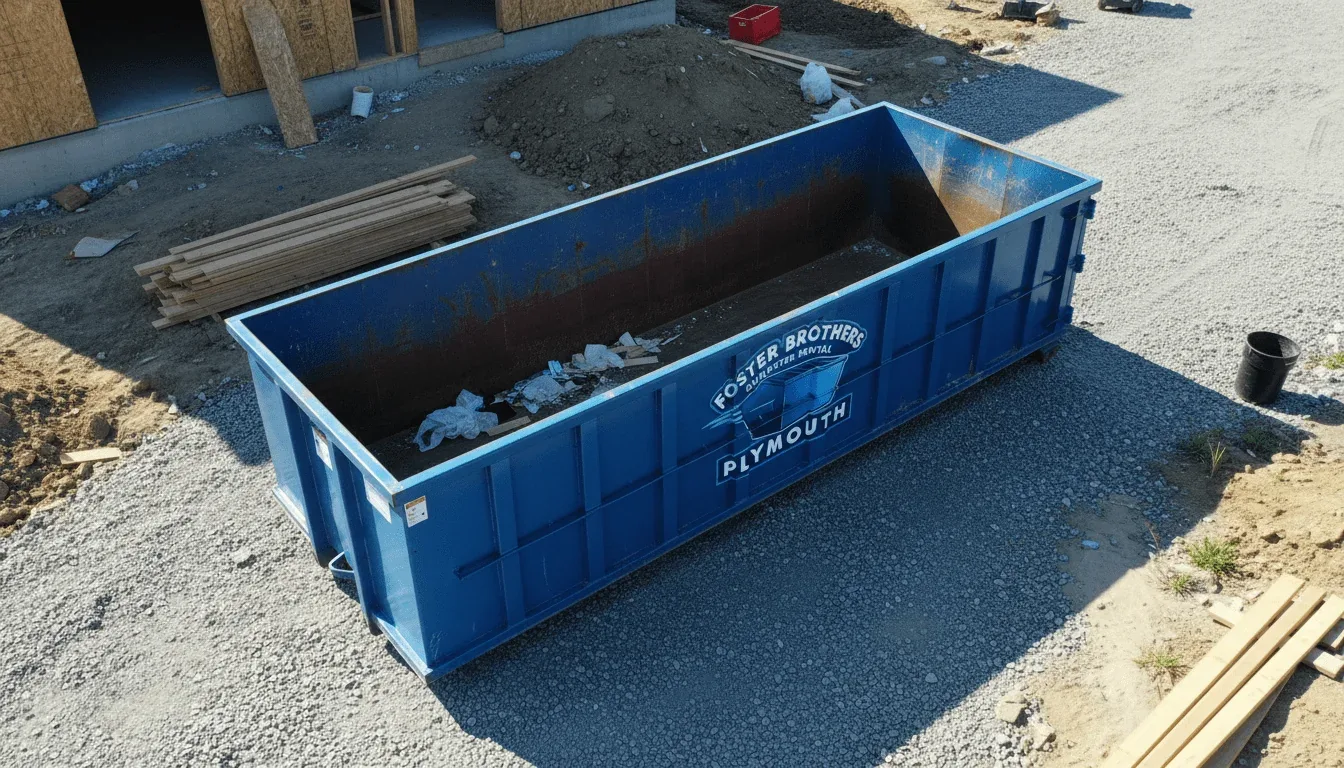
Clearing out a family home is rarely simple. Here's a practical, room-by-room way to work through it — and where a dumpster rental fits into the process.
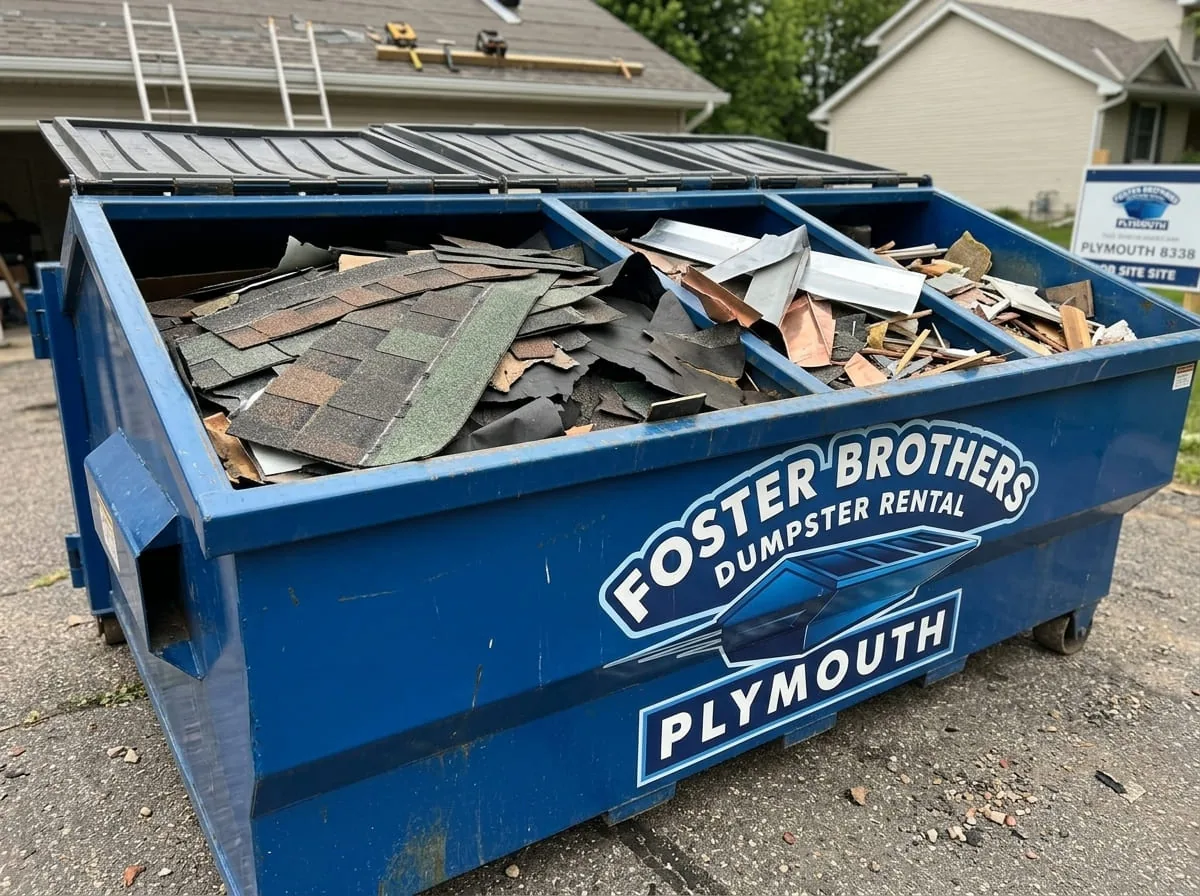
Sizing a dumpster for a re-roof comes down to a few numbers most homeowners don't think about until the crew shows up. Here's how to get it right the first time.