
Do You Need a Permit for a Dumpster in Plymouth, MA?
It mostly comes down to where the container sits. Here's the difference between driveway placement and street placement in Plymouth — and who actually regulates it.
Plymouth dumpster guide
Most household, construction and yard debris is fine — but Massachusetts has a few state-specific rules worth knowing before you load, starting with electronics.
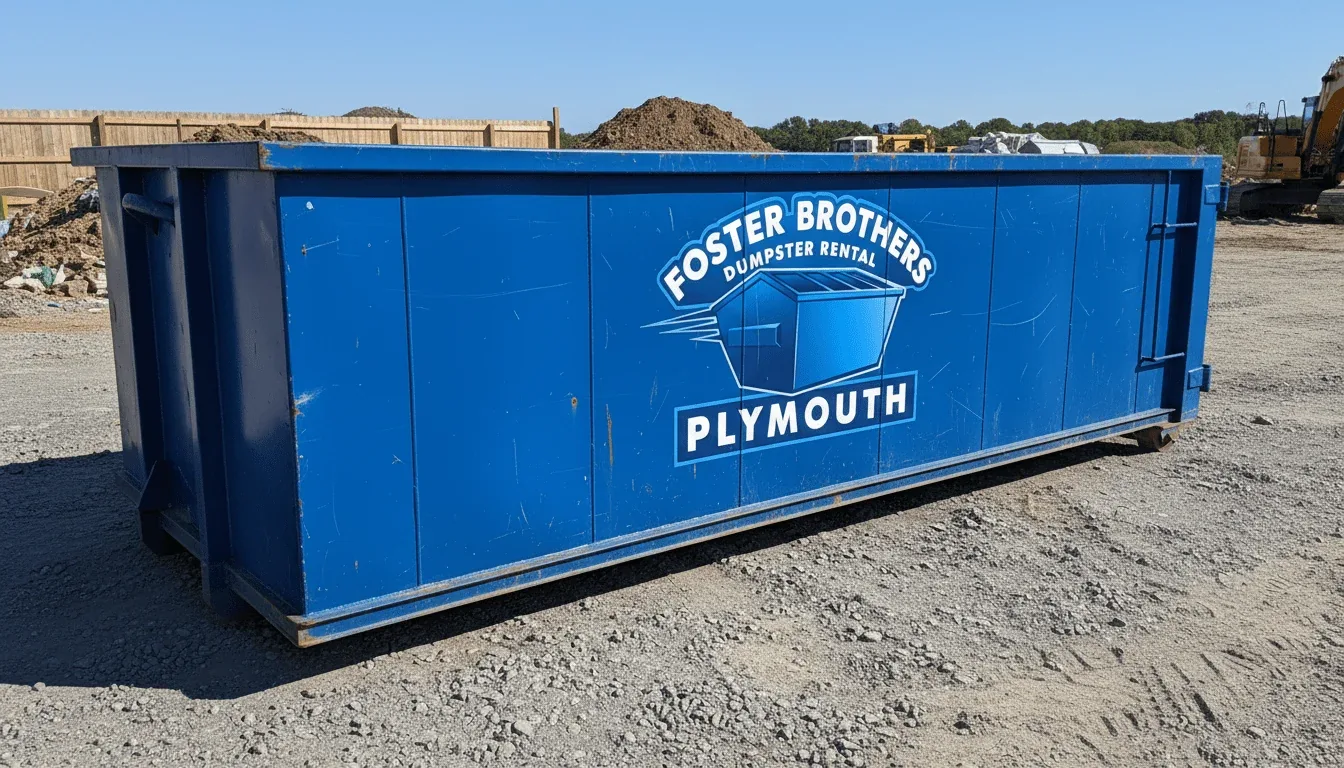
The list of what can go in a roll-off dumpster is longer than most people expect — but Massachusetts also has a few specific, state-level rules that are worth knowing before you start loading, because they apply everywhere in the state, not just to certain haulers. Here is a straightforward rundown of what is generally fine, what generally is not, and the Massachusetts-specific rules behind the difference.
Most day-to-day debris is straightforward. General household junk and furniture, old appliances (without a refrigerant charge, more on that below), construction and demolition debris such as wood, drywall, flooring and roofing shingles, and yard waste like brush and branches are all routine loads for a residential, construction or yard waste dumpster. Whole-house contents from an estate cleanout, garage and attic clutter through a junk removal load, and mixed demolition material through a demolition debris container are all normal, too. If you are unsure whether something specific fits, ask before you load it — it is a much easier conversation before the container is full than after.
A handful of categories are excluded from ordinary dumpster loads almost everywhere, not just in Massachusetts, because they need separate, regulated handling: hazardous materials like paint, solvents, pesticides and other chemicals; tires; car and other lead-acid or lithium batteries; propane tanks and other pressurized containers; and any appliance that still holds refrigerant, such as an intact refrigerator, freezer or air conditioner, which needs the refrigerant properly recovered first. None of these are safe to bury in a landfill or run through standard waste handling, which is exactly why they are treated differently.
Massachusetts was the first state in the country to ban cathode-ray tubes — the leaded glass in old-style televisions and computer monitors — from landfills and incinerators, a rule that took effect April 1, 2000 and remains in effect today. In practice, that means older CRT televisions and monitors need to go through electronics recycling rather than a general debris load, and it is a good habit to extend the same caution to other electronics and e-waste generally, even though the CRT rule is the one written specifically into state policy.
Beyond electronics, the Massachusetts Department of Environmental Protection (MassDEP) maintains a broader list of materials banned from disposal in landfills and incinerators statewide, because they have real recycling value and clog up disposal capacity when they are not separated out. The list includes asphalt, brick and concrete; metal; wood waste; clean gypsum wallboard; and, as of a November 2022 addition, mattresses and textiles. This does not mean these materials cannot go in a dumpster — on a construction or concrete and heavy debris job, most of this material is exactly what a roll-off is built to haul. What it means is that the material has to be routed to recycling rather than straight to a landfill on the back end, which is part of why Foster Brothers partners with regional recycling and material recovery facilities rather than sending every load to disposal. The full list and details are on MassDEP’s Waste Disposal Bans guide.
A few categories sit in a gray area worth flagging specifically. Mattresses and box springs are now on MassDEP’s disposal ban list as of the November 2022 addition, which means they need to be routed to recycling rather than landfill — they can still go in a dumpster, they just need to be identified as part of the load. Appliances are similar: a stove or dishwasher is routine, but anything that held refrigerant needs that refrigerant recovered before disposal, which is a separate step from ordinary loading. Textiles — old carpet, clothing, upholstered furniture fabric — fall under that same 2022 addition. None of this means these items are off-limits; it means calling them out when you book keeps the load compliant without slowing anything down on your end.
Under Massachusetts rules, both the generator of the waste — the property owner or contractor — and the hauler share legal responsibility for keeping banned materials out of disposal and routed correctly. In practice that is a reason to be upfront rather than a reason to worry: telling us what is going into the container, even a mixed load with a mattress, some drywall and old wood trim, lets us route it correctly instead of guessing after the fact.
Massachusetts sets its own waste disposal rules through MassDEP, and the state sits within the U.S. Environmental Protection Agency’s Region 1, covering New England, alongside Connecticut, Maine, New Hampshire, Rhode Island and Vermont. Federal rules set a baseline, but the specifics that actually affect a Plymouth dumpster load — the CRT ban, the disposal ban list — are state-level MassDEP policy, which is also why they apply the same way whether you are in Plymouth, on the South Shore, or anywhere else in Massachusetts.
If a material is something you would not want to bury in your own backyard — a chemical, a battery, anything pressurized, an old CRT television — treat it as a special-handling item rather than a dumpster item. If it is ordinary household, renovation, demolition or yard debris, it is almost certainly fine, and describing it when you book means we bring the right container sized correctly from the start. Check our FAQ page for more, or contact us if you have a specific item you are unsure about before you load it.
FAQs
Not if it has a cathode-ray tube. Massachusetts was the first state to ban CRTs from landfills and incinerators, effective April 1, 2000, and that ban is still in effect — older tube-style TVs and monitors need to go through electronics recycling instead.
Yes — wood, drywall, flooring, roofing shingles and similar material are routine loads for a construction or demolition dumpster. Materials like asphalt, brick, concrete, metal, clean gypsum wallboard, and mattresses or textiles are on MassDEP's waste disposal ban list, meaning they need to be routed to recycling rather than a landfill, but they are still commonly hauled in a roll-off.
In Massachusetts, both the generator of the waste — the property owner or contractor — and the hauler carry responsibility for keeping banned materials out of landfill disposal, which is why it helps to describe unusual items when you book rather than after the container is loaded.
Ready when you are
Call and you will speak to someone local who knows the streets, the permit rules and which box actually fits your driveway. Flat rate quoted up front.
Keep reading
It mostly comes down to where the container sits. Here's the difference between driveway placement and street placement in Plymouth — and who actually regulates it.
What's recyclable, what's bannable, and how to size the container — plus who actually carries compliance responsibility on a Massachusetts jobsite.
Clearing out a family home is rarely simple. Here's a practical, room-by-room way to work through it — and where a dumpster rental fits into the process.