
Estate Cleanout Checklist for Plymouth Families
Clearing out a family home is rarely simple. Here's a practical, room-by-room way to work through it — and where a dumpster rental fits into the process.
Plymouth dumpster guide
What's recyclable, what's bannable, and how to size the container — plus who actually carries compliance responsibility on a Massachusetts jobsite.
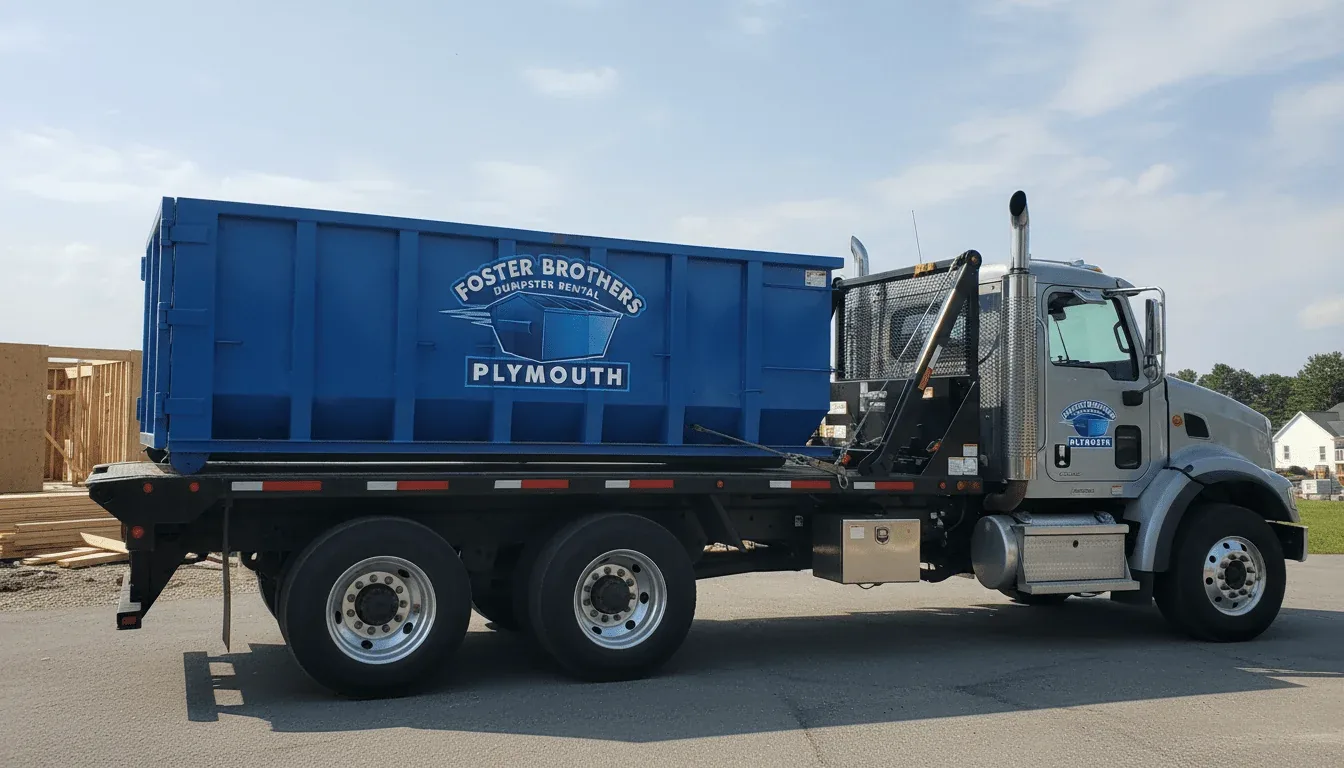
Construction and demolition debris — C&D, for short — is its own category of dumpster job. It is heavier, more variable, and more regulated than a typical household cleanout, and getting it wrong has real consequences for whoever generated it. Here is what to know before your next Plymouth job, from what is recyclable to who is actually on the hook if something goes sideways.
A construction or demolition job usually produces a mix: framing lumber and other wood waste, drywall offcuts, flooring, roofing shingles, metal flashing and fixtures, and often asphalt, brick or concrete from foundations, walkways or driveway work. All of it is routine material for a construction dumpster, demolition debris container, or, for the heaviest material specifically, a concrete and heavy debris load.
Massachusetts, through MassDEP, bans several C&D-adjacent materials from landfill disposal and incineration — not because they cannot go in a dumpster, but because they have to be routed to recycling rather than the landfill on the back end. The list covers asphalt, brick and concrete; metal; wood waste; clean gypsum wallboard; and, since a November 2022 addition, mattresses and textiles, which increasingly show up on renovation and demolition jobs alongside old furnishings. In practice, this is good news for a jobsite: most of this material has real recycling value, and separating it out — keeping clean concrete apart from mixed debris, for instance — often makes disposal more efficient rather than less. Foster Brothers partners with regional recycling and material recovery facilities specifically so this sorting happens correctly rather than falling on the customer to figure out alone. For the fuller technical picture, MassDEP’s Waste Disposal Bans guide and RecyclingWorks Massachusetts’ C&D guidance both cover the specifics in more depth than a single blog post can.
C&D loads are where the weight-versus-volume distinction matters most, because construction debris runs the full range from very light (insulation, packaging) to very heavy (concrete, tile, plaster). For dense material like concrete, brick or a two-layer roof tear-off, a 10 or 20 yard with a matched tonnage allowance is usually the better economics even though the box looks small. For bulky, lighter debris across a full renovation or new-build phase, a 30 yard gets more volume without wasting weight allowance. Larger commercial demolition or multi-phase jobs sometimes call for a 40 yard, or a swap schedule where a full container is exchanged for an empty one as the job progresses. Our full breakdown of how to size a dumpster walks through each size in more detail, and the sizes page has the specs side by side.
Under Massachusetts rules, the generator of C&D waste — the property owner or the contractor running the job — carries legal responsibility for keeping banned materials properly separated and out of landfill disposal, and the hauler carries that same responsibility on their end. Neither side gets to assume the other one is handling it. In practice that means it is worth telling us upfront what a load contains, especially if it is going to include a meaningful amount of gypsum wallboard, mattresses, or anything outside a standard mixed C&D load, so it gets routed correctly from the start rather than sorted out after the fact.
The compliance principles are identical whether the job is a single-family kitchen gut or a larger commercial demolition, but the scale changes the logistics. A homeowner running one renovation phase typically needs one container sized correctly and picked up once. A contractor running a multi-week demolition or a commercial build-out is more often better served by a scheduled swap-out plan — a full container exchanged for an empty one at set intervals — so the job never stalls waiting on debris removal, and so each load can still be sorted and routed correctly rather than building into one oversized, mixed pile.
Keeping heavy material like concrete and brick in a separate container from lighter debris, when the job allows it, tends to control cost and simplify recycling at the same time. Loading flat rather than heaping above the top rail keeps the load legal to transport and avoids it being refused at the gate. And on Plymouth-area sites near softer or bog-adjacent ground, placing the container on the firmest available section of the pad or driveway helps avoid rutting under a full load’s weight over the course of a multi-week job.
Beyond the legal responsibility itself, there is a practical reason to get C&D disposal right: recycling markets for material like clean concrete, metal and dimensional lumber are well established in Massachusetts, and material that goes to landfill instead of recycling is, in a real sense, value left on the table as well as a compliance risk. A jobsite that sorts as it goes — even loosely, keeping the heaviest inert material separate from mixed debris — tends to come out ahead on both counts by the time the project wraps.
Describe the phase of work, the mix of material, and roughly how long the container needs to stay on site, and we will size and schedule it accordingly — including a swap-out plan for longer jobs. See construction dumpster rental and demolition debris for service specifics, or contact us to plan your next phase.
FAQs
They can be mixed, but separating heavy material like concrete, brick and asphalt from lighter wood waste often controls cost and improves recycling outcomes, since MassDEP treats both categories as recyclable rather than landfill material.
Both the generator of the waste — the property owner or contractor — and the hauler are legally responsible for keeping banned materials separated and out of landfill disposal. Describing your load accurately when you book helps make sure it's routed correctly.
It depends on the material mix, but a 20 yard is a common default for renovation debris, a 30 yard suits full-house jobs with bulkier, lighter material, and a 10 yard is often the better economics for dense material like concrete or tile alone.
Ready when you are
Call and you will speak to someone local who knows the streets, the permit rules and which box actually fits your driveway. Flat rate quoted up front.
Keep reading
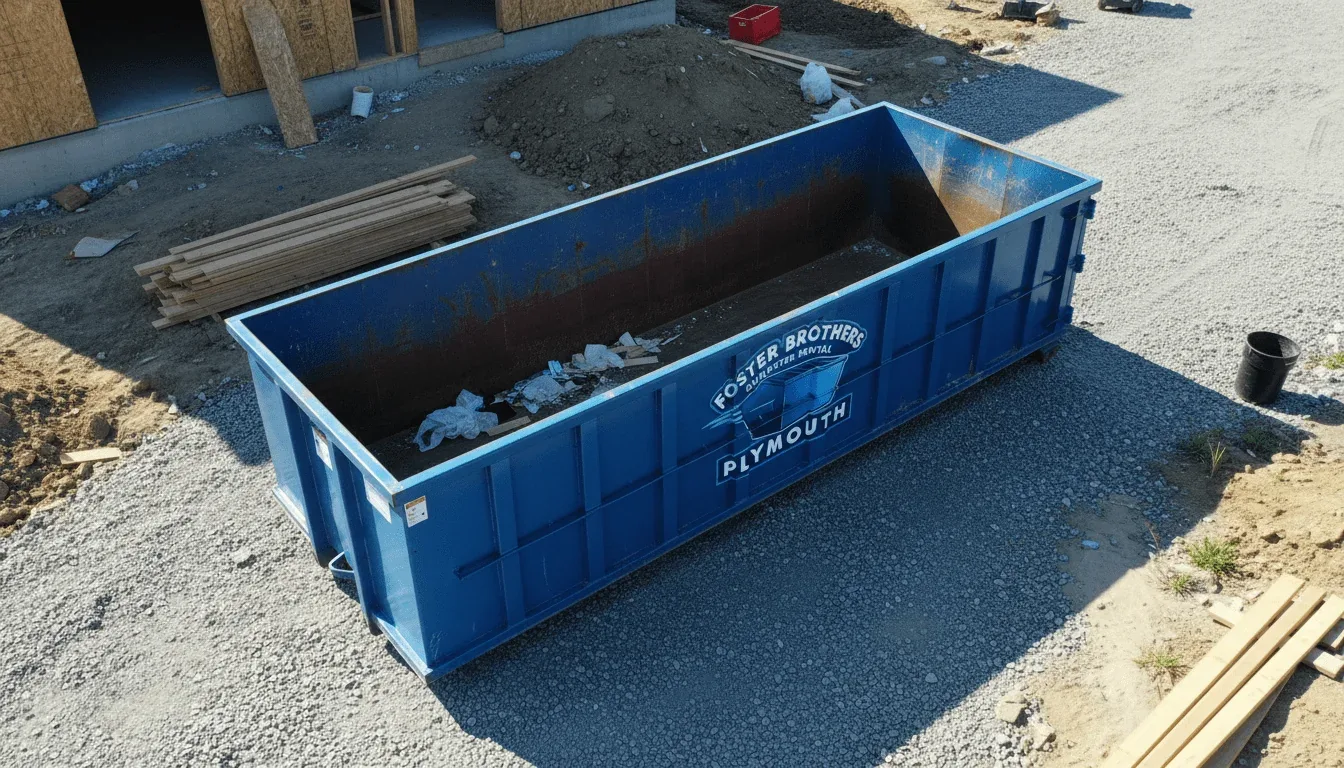
Clearing out a family home is rarely simple. Here's a practical, room-by-room way to work through it — and where a dumpster rental fits into the process.
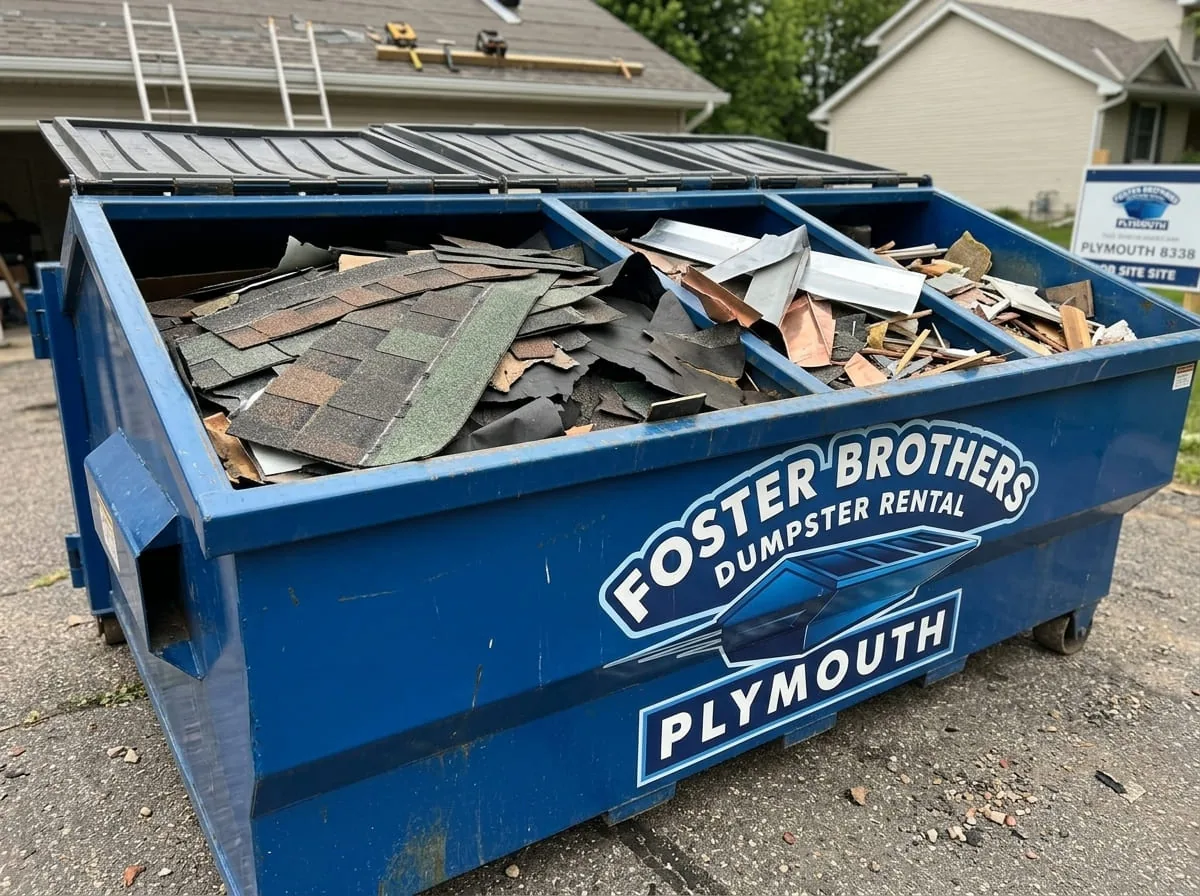
Sizing a dumpster for a re-roof comes down to a few numbers most homeowners don't think about until the crew shows up. Here's how to get it right the first time.
Nearly fifty years later, the Blizzard of 1978 is still the benchmark South Shore residents measure every big storm against. Here's the real history, and a practical guide to cleaning up after the next one.